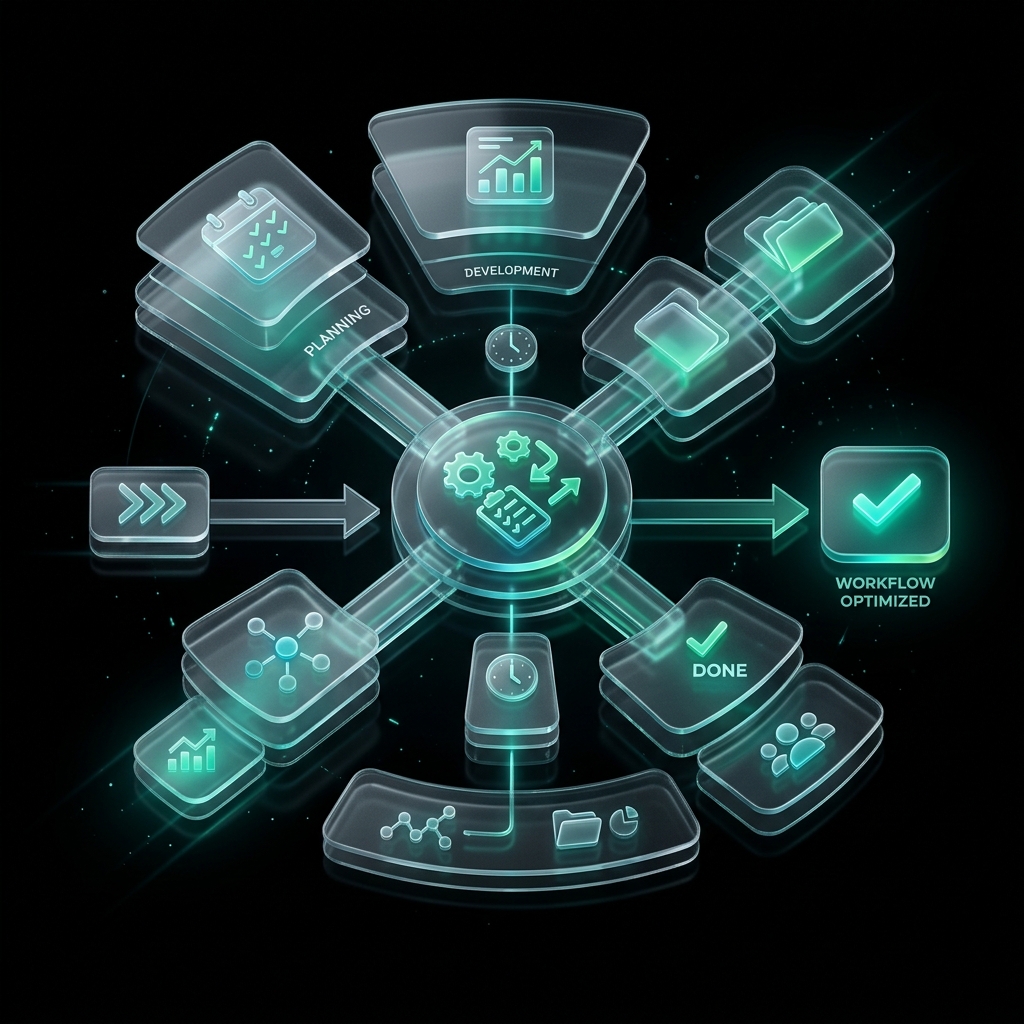
Modern work is broken into dozens of apps.
You start your day in Slack.
Jump into Notion.
Open Figma.
Reply to emails.
Check Google Docs.
Switch to Zoom.
Open ChatGPT.
Then somehow end up with 47 browser tabs and zero mental clarity.
The problem isn’t laziness.
The problem is digital fragmentation.
Today’s professionals use more tools than ever before, yet many feel less productive, more distracted, and constantly overwhelmed.
If you’ve been searching for:
- how to organize work apps
- how to reduce app clutter
- productivity systems for remote work
- best way to manage multiple apps
- how to avoid context switching
…this guide will help you create a cleaner, faster, and more focused digital workspace.
Why Too Many Apps Destroy Productivity
Every time you switch between apps, your brain pays a cognitive cost.
This is called context switching.
Research shows that constant interruptions and app switching reduce focus, increase stress, and lower work quality.
Common symptoms of app overload:
- Forgetting where information is stored
- Reopening the same tabs repeatedly
- Missing tasks between tools
- Constant notification anxiety
- Feeling “busy” but not productive
- Digital fatigue after work
The average knowledge worker now uses dozens of apps daily.
Without a system, your tools start controlling your workflow instead of supporting it.
Step 1: Create a Central Operating System for Work
The biggest mistake people make is spreading tasks across multiple apps.
Your brain needs one “home base.”
Choose a primary workspace where all important information lives.
Popular options:
- Notion
- ClickUp
- Obsidian
- Trello
- Asana
- Linear
This becomes your digital headquarters.
Your main workspace should contain:
- Daily tasks
- Project links
- Notes
- Priorities
- Quick access dashboards
- Important documents
Instead of remembering where everything is, you create one reliable source of truth.
Step 2: Organize Apps by Function
Most people organize apps randomly.
A better approach is grouping apps based on purpose.
Communication Apps
Examples: Slack, Gmail, Microsoft Teams, WhatsApp
Purpose: Messaging, updates, meetings, collaboration.
Creation Apps
Examples: Figma, Photoshop, Canva, Premiere Pro
Purpose: Design, editing, content creation.
Development Apps
Examples: VS Code, GitHub, Terminal, Postman
Purpose: Coding, testing, deployment.
Storage & Documentation
Examples: Google Drive, Dropbox, Notion, OneDrive
Purpose: Files, assets, documentation.
Meetings & Scheduling
Examples: Zoom, Google Meet, Calendly
Purpose: Calls, scheduling, coordination.
When apps are grouped logically, your brain retrieves information faster and experiences less mental friction.
Step 3: Reduce Context Switching
Context switching is one of the biggest productivity killers in modern work.
Every notification interrupts focus.
Even a quick Slack check can break deep concentration.
Here’s how to reduce unnecessary switching:
Batch Communication
Instead of checking messages constantly:
- Check email 2–3 times daily
- Respond to Slack in scheduled windows
- Disable non-essential notifications
Use Focus Blocks
Create uninterrupted work sessions:
- 45–90 minute deep work blocks
- No meetings
- No social media
- Minimal tabs open
Keep Fewer Tabs Open
Too many tabs increase cognitive load.
Use:
- Tab groups
- Bookmark folders
- Read-later apps
- Workspace browsers like Arc
Your digital environment should feel calm, not chaotic.
Step 4: Use an App Launcher for Faster Access
Searching for apps repeatedly wastes time and attention.
An app launcher helps you instantly access tools, files, commands, and workflows from one place.
Popular app launchers:
- Raycast
- Alfred
- Spotlight
- NexusPad
- Arc Command Bar
Benefits:
- Faster navigation
- Less desktop clutter
- Reduced mouse dependency
- Improved workflow speed
- Better multitasking
Instead of hunting for apps, you launch everything with a few keystrokes.
Small friction adds up throughout the day. Removing that friction improves focus significantly.
Step 5: Build Workflows Instead of Tool Collections
Many people install productivity tools endlessly without improving productivity.
More apps do not equal better systems.
Instead of collecting tools, design workflows.
A simple workflow example:
Ideas → Notion
Design → Figma
Tasks → Linear
Communication → Slack
Storage → Google Drive
The goal is clarity.
Each app should have a clear responsibility. Avoid overlapping tools whenever possible.
For example:
- Don’t use three note-taking apps
- Don’t manage tasks in multiple places
- Don’t duplicate files unnecessarily
Simple systems scale better.
Step 6: Declutter Your Digital Workspace
Digital clutter affects focus the same way physical clutter does.
Your desktop, browser, folders, and apps directly impact mental clarity.
Clean Your Desktop
- Remove unused files
- Organize folders clearly
- Keep only essential shortcuts
Audit Browser Extensions
Too many extensions slow browsers and create distractions. Remove unused tools regularly.
Archive Unused Apps
If you haven’t used an app in 30–60 days:
- uninstall it
- archive it
- unsubscribe from notifications
Minimal environments improve decision-making.
Step 7: Design Your Workspace Like a UX Designer
Your digital workspace is a user experience problem.
Poor UX creates friction. Good UX creates flow.
Ask yourself:
- Is this easy to navigate?
- Can I find files quickly?
- Are distractions minimized?
- Does this workflow feel intuitive?
The best productivity systems are intentionally designed.
That includes folder structures, naming systems, browser organization, shortcuts, dashboards, and automation.
Treat your workspace like a product you use every day. Because you do.
Best Productivity Tools for Organizing Work Apps
Here are some popular tools for building a streamlined digital workspace:
Workspace & Organization
- Notion
- ClickUp
- Trello
- Obsidian
App Launchers
- Raycast
- Alfred
- NexusPad
- Spotlight
Browser Productivity
- Arc Browser
- OneTab
- Toby Tabs
Focus & Deep Work
- Forest
- Freedom
- Cold Turkey
- Brain.fm
Automation Tools
- Zapier
- Make
- n8n
Choose tools that reduce friction instead of adding complexity.
Final Thoughts
The future of productivity isn’t about using more apps. It’s about creating better systems.
When your tools are organized:
- work feels lighter
- focus improves
- execution becomes faster
- stress decreases
- creativity increases
Stop chasing productivity hacks.
Start designing a digital environment that supports deep work and clarity.
Because the real goal isn’t managing apps. It’s protecting your attention.
Frequently Asked Questions
How do I organize too many apps for work?
Start by creating one central workspace, grouping apps by function, reducing notifications, and removing unused tools.
What is context switching?
Context switching happens when your brain rapidly moves between tasks or apps, reducing focus and productivity.
What are the best tools for organizing work apps?
Popular tools include Notion, Raycast, Alfred, ClickUp, Arc Browser, and app launchers like NexusPad.
Why do too many apps feel overwhelming?
Too many apps create decision fatigue, fragmented workflows, and constant interruptions, which increase mental load.
How can I improve focus while working remotely?
Use deep work blocks, reduce notifications, organize your workspace, and simplify your digital tools.